Friday, April 6, 2012

Early Stereophonic Broadcasting


FM Stereo broadcasting was approved by the FCC on April 20, 1961. Yet I found an interesting way local radio stations were attempting to take advantage of just that sound prior to that date.

Both WOSU AM and FM as well as WBNS AM an FM began stereophonic broadcasts on a regular basis in 1957. But instead of using one band, they used both their AM and FM frequencies to make up the broadcasts.

WOSU had experimented with the process for about a year before beginning a regular schedule. WBNS would just begin, as their FM had returned to the air after a 4 year period of silence on Thanksgiving Day, 1957.

WOSU did their daily broadcasts in the afternoons between 4:30 and 5:30 pm. WBNS waited until the end of the day to do theirs which was between midnight and 1 am. Oddly at a time when the WBNS AM signal would suffer night time ingress from other stations as well as their reduced power and directional signal.

High and low end audio frequencies were split between the bands. The FM signal would carry the lows while the AM signal focused on the highs.

Saturday, December 17, 2011

Friday, December 9, 2011

You Can Set Your Mickey Mouse To That

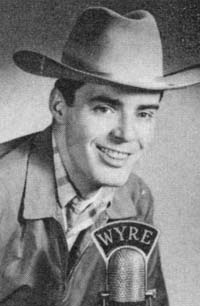
Ron Barlow of WMNI radio and the founder and owner for a time of WUCO radio in Marysville, OH.

Monday, December 5, 2011

Gone With the Wind

With a final playing of Wooly Bully, WTVN morning host Bob Conners took of the headsets for the last time as a Columbus Radio host on November 30, 2011.

On October 24, 2011 at 7:45 in the morning, Bob Conners both shocked and gave the probably long expected news that he would be retiring and his last day on the air would be November 30th. In almost 47 years behind a Columbus microphone, Bob grew with Columbus. And he leaves behind many great memories.

He came to Columbus in very late 1964 to host the afternoon show vacated by Spook Beckman who was starting a new TV show called the Coffee Club. Bob received very little press on his arrival yet filled the large shoes left behind when Spook left.

 He maintained that spot until February of 1973 when he left for 3 short years to be morning host on WBNS 1460. Bob left WBNS in February of 1976 on the implosion of a promotion called the Perfect Partner. Whether that was the straw that broke the camels back or his return to WTVN was already in the works, Bob did indeed return to the WTVN afternoon airwaves in March of 76 after a brief Colorado skiing vacation.

Change would again happen in September of 1979 when John Fraim and WTVN management came to an impasse on scheduling issues. At first, Bob was filling in for Fraim as a vacation host. By the end of September, Fraim and WTVN couldn't come to agreement and Bob never left the morning host chair. (Scott Kahler had temporarily taken Conner's afternoon spot and shortly after 1980 arrived, Joe Waldman a former staffer had been permanently hired to fill the PM slot.)

As time went on, Bob would go on to survive several general managers and program directors, other hosts, ownership changed, the addition of talk syndication to the program schedule and the final big transition to an all talk format on the station.

Bob also introduced us to Sammy of Sammy's Bar and Grill, the Mail Man and the always silent Jesse. He ragged on the Danger Brothers at the rally in the alley and Hiney Gate, he playfully played of Wooly Bully and made Hudson and Landry's Frontier Christmas featuring Harlowe and Red Feather a longstanding Columbus Christmas tradition.

He teased us about Monk's Corner, Nerk, samiches and the Chicken Little Day Care calling in to cancel session because of a few snowflakes. He often referred to sports teams by their city name made possessive. For example, Michigan was the Michigan's. If it hadn't been for Bob, I would have never discovered Nancy's. For many years, Bob did a shout out to the guys and gals having early morning breakfast at the popular Clintonville eatery. At one time he collected menus from out of town diners and people would send them in for addition to his collection.

In addition, he introduced us to tele-vote, the Hiney Winery that had people driving to the decaying village of Magnetic Springs in search of the fictional winery owned by Big Red and Thor. There was the Cat Lady, the late Jim from the Northwest, the imperfect perfect partner and sadly Dave from Powell.

And he was the king of graciously bowing out (my wife always said blowing off) of being asked to attend a myriad of ice cream socials, fish fries or bake sales. He even managed to do it to Governor Kasich on his last day on the air.

We knew he was born in St. Marys, Pa., his brother Dan played for San Diego and Oakland pro football teams and he gave us other glimpses of his private life periodically telling us about daughter Kathryn and wife Linda. Yet in general, Bob was a reserved man.

Bob arrived in Columbus before Eastland Mall and the I-270 outerbelt existed. In those days, I-70 only was a few miles long and ran from downtown to someplace west of Hamilton Road. Columbus for all intents and purposes on the north side ended at Bethel Road and just north of Morse Road.

Hamilton Road. 161 and Brice Road were still two lane roads with dirt yet to be turned to make way for the neighborhoods that would grow up around them. Dublin was two gas stations and a traffic light. Westerville, Pickerington, Gahanna, Grove City and Hilliard were all mere villages when Bob cracked a Columbus microphone for the first time.

Even television had a totally different look.  The major tv anchors were Hugh DeMoss, Earl Green, Nick Basso, Bill Pepper and Roy Briscoe. PBS was known as NET. Channel 28 wasn't even in the planning stages for the Columbus market. Cable television was something of a pipe dream.

The Columbus mayor was Sensenbrenner, the governor was Jim Rhodes (his first of 4 terms) and LBJ was in the White House and had just won a landslide victory over Barry Goldwater.

WTVN posted some video clips on the departure of Bob Conners on their web site. Included are a couple of old air-checks including one from his days at WEEP, one from WBNS and one from WTVN circa late 60's or early 70's, a co worker salute and the final hour of Bob's show among other things. http://www.610wtvn.com/pages/farewellbc.html

In a video clip on the site, Bob relates that he knew Columbus would be home. One has to wonder what he sacrificed to do that. In the entertainment world, personalities come and go. It's a very hard and difficult business. And to survive as long as Bob did, it took not only talent, but sacrifice and great savvy. Yet Bob seemed to always have a place. And that is amazing.

Being a fan of radio in general and Bob in particular, it would be interesting to spend some time over a cup of coffee and talk about radio, his career, his high points and yes probably some of the low points as he made Columbus someplace special.


Bob turning the reins over to his heir apparent Joel Riley.

Wednesday, November 23, 2011

WTVN begins Countdown to Say Goodbye to BC


It's the end of an era.

When Bob Conners took off the headphones for the final time on November 30th,2011, a radio era ended.

When Bob came to Columbus, the radio scene was radically different. Hired to replace Spook Beckman on WTVN as afternoon host at the end of 1964 when Spook made the move to television, his competition was a far cry from what it is today.

WBNS had Irwin Early Worm Johnson in morning and Dean Lewis in afternoon drive along with CBS network programs sandwiched in between. WMNI was playing standards hosted by largely nameless record spinners but Bill Robinson, Ron Barlow and Tom George were already in the stable. WMNI hadn't made the transition to the Country format for which it became famous.  WVKO had only a little over a year before made the transition from top 50 to what was then called a Negro format. Eddie Castleberry and Eddie Saunders were the early mainstays of the format at the 1580 position.

WCOL was playing the top 40 hits. Hosts like Johnny Hill, Sonny Palmer, Mike Adams, Bob Harrington and Johnny Buck were manning the microphones. Up the road at WRFD, Pop Hess and Clyde Keathley anchored farm broadcasts along with Johnny Martin (JM in the AM) and Bill Collins spinning the music platters.

Even WTVN was different. While long time mid-day host Dave Logan was already in place, morinngs was anchored by Johnny Dollar and evenings by Jim Lohse and Dick Boyer.

And the Columbus FM dial was almost an after thought.

And along comes Bob replacing then afternoon legend Spook Beckman.

Through the years, Bob wore many hats.

  •  He did color for the Columbus Jets for the two seasons that WTVN had them in 67 and 68.
  •  He made a side trip to WBNS in 1973 to host mornings. 
  •  He returned to WTVN in afternoon drive in April of 1976
  •  He added color commentary for OSU football broadcasts when WTVN was the sole home for local broadcast rights in the market and state. 
  • Sometime while still afternoon host, Bob began taking calls on Saturdays. When he moved to mornings that segment moved with him and became a Columbus institution known as Saturday Morning open phones. 
  •  And of course it was in September of 1979 when John Fraim had a dispute with management and left the station, Bob assumed the time slot at first temporarily and within a few weeks permanently and laid the groundwork to become the Morning Monarch.

In those almost 47 years behind a Columbus microphone, Bob grew with Columbus and on Columbus as the city itself grew.

Bob introduced us to Sammy of Sammy's Bar and Grill, the Mail Man, the always silent Jesse. He ragged on the Danger Brothers, his playing of Wooly Bully when it was "banned" from the WTVN airwaves and making a Frontier Christmas staring Harlowe and Red Feather a longstanding Columbus Christmas tradition.

He teased us about our uniquely named Monk's Corner and "Nerk". He introduced us to samiches. And the Chicken Little Day Care as they called in to cancel session because of a few snowflakes.

And yes, if it hadn't been for Bob, I would have never discovered Nancy's. For many years, Bob did a shout out to the guys and gals having early morning breakfast at the popular Clintonville eatery.

In addition, he introduced us to tele-vote, having more than a few make the trek to Magnetic Springs in search of the Hiney Winery, allowing the Cat Lady to tell us about the pet of the week available at the shelter she worked at, suffering through the imperfect Perfect Partner contest and sadly even Dave from Powell.

Bob was here before Eastland Mall and the I-270 Outerbelt were built. I-70 at the time only ran from downtown to someplace short of Hamilton Road. Columbus for all intents and purposes to the North ended at Bethel Road and Morse Road.  Hamilton Road, Route 161 and Brice Road were still two lane roads with dirt yet to be turned to make way for the neighborhoods that would grow up around them. Dublin was two gas stations and a traffic light. Westerville, Pickerington, Gahanna, Grove City and as Bob would say "Hilliards" were all mere villages when Bob cracked a Columbus microphone for the first time.

Even the TV scene was different.  The major tv anchors were Hugh DeMoss, Earl Green, Nick Basso, Bill Pepper and Roy Briscoe. PBS was known as NET.

The Columbus mayor was Sensenbrenner, the governor was Jim Rhodes (his first of 4 terms) and LBJ had just been elected to his first full term to the White House.

WTVN has posted some teaser clips on the departure of Bob Conners on their web site. A couple of old air-checks including one from his days at WEEP, one from WBNS and one from WTVN circa late 60's or early 70's.

In a video clip on the site, Bob relates that he knew Columbus would be home. One has to wonder what he sacrificed to do that. In the entertainment world, personalities would come and go. Yet Bob seemed to always have a place. And that is amazing.

So what was his secret?  He seemed to have a pulse on the people of the city.  He never talked up, down or at his listeners.  He talked to them in their language.  He was extremely well informed.  Before the advent of the internet, Bob would consume several newspapers daily.  Bob was hip and on top of current trends and events.  And most of all, he was relevant.

Being a fan of radio in general and Bob in particular, it would have been interesting to spend some time over a cup of coffee and talk about radio, his career, his high points and yes probably some of the low points as he made Columbus someplace special.  Now that opportunity is now gone.

Update on WOSU


I saw on a web forum that the closing date has been scheduled and WOSU-AM will cease broadcasting it's regular programming at 5:00 pm December 9, 2011. The station broadcast a series of announcements in a loop type format featuring the on air newscasters and talk show hosts telling listeners that WOSU Public Media is no longer broadcasting on 820 AM and telling them to tune to 89.7 FM to hear their favorite programs. It is reported that loop will cease at 9:00 am December 14th. It will return on or about December 20th with a new owner and program format.

And that will be another page of radio history .

Sunday, September 11, 2011

Losing an Old Friend


It's odd, but it's almost like divorce. A big part of my life is in the process of leaving me.

Friday evening, Ohio State University announced the sale of WOSU-AM to St. Gabriel radio.

I knew it was coming. The writing had been on the wall for a long time. Yet seeing the announcement of the sale in writing seemed untimely. Unreal.

WOSU-AM has been a part of my broadcast life since 1987. I was hired in January of that year to host the afternoon segment of Big Band Saturday. Over time as programs came and went, I was finally assigned a permanent part-time hosting spot in the rotation for the popular Bluegrass Ramble program.

But the station dates back to time even before my fathers' birth.

In 1922, WOSU's predecessor, WEAO, went on the air at a Neil and 17th avenue location. The station is one of the 10 oldest continuous operating radio stations in the country and the oldest in Columbus. WEAO, which stood for Willing Energetic Athletic Ohio, was renamed WOSU in 1933. The station had at least one other campus location until it moved into the Fawcett Center in the early 70's.

For many years, WOSU operated as a "daytime" only station meaning it was only on the air during daylight hours. In the late 80's, night authority was obtained and the station began operating between 18 and 24 hours per day, depending on funding available. It was thought at the time that by being allowed to broadcast on a regular morning time period and evening broadcasts throughout the year, the station would obtain more listeners. And for a brief time it did. But as listener habits shifted away from AM to FM, WOSU began to feel the tug of lost listeners. In January 2011, all AM programming shifted to the FM was the AM was marketed for sale.

Based on the announcement, a buyer has been found.

It is for the long term best, yet it's difficult to let go of an old radio frequency friend. May the new owners take care and nuture the station once the keys are officially turned over to them in late 2011 or 2012.